FRANCK TAWEMA

Every experience moves.
I study what movement reveals.
Most teams design the space.I analyse the movement.Because movement is where experiences either work or break down.I help teams understand, communicate and improve how experiences will move before they go live.

Every experience, whether it's a conference, office, exhibition or retail space, moves through a series of experiential states.
Arrival. Exploration. Touchpoint. Congregation. Departure.
Every experience passes through these states.The difference is simply which ones dominate at different moments.Flow is the movement between them.
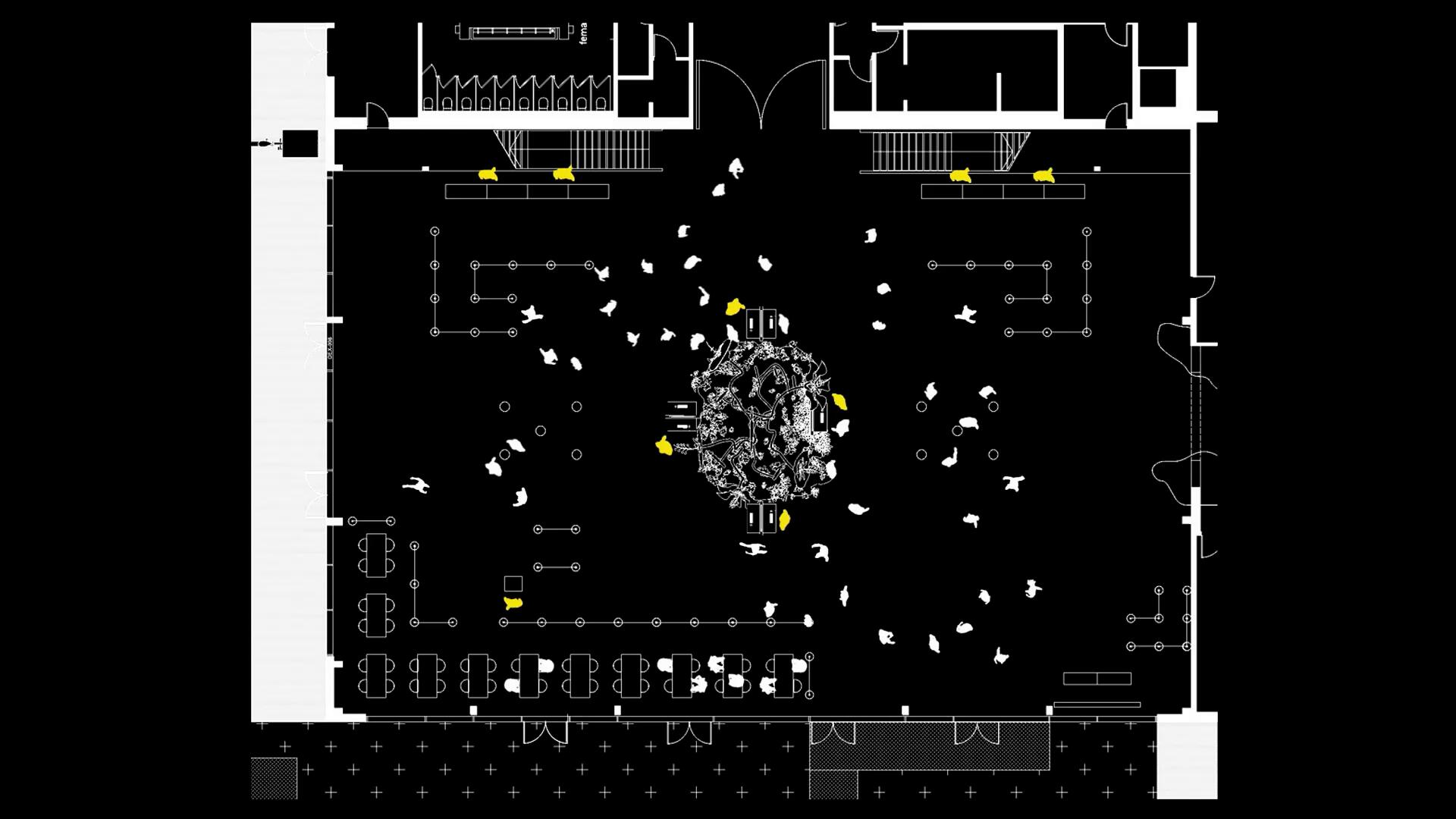
"Simply watching an experience move often reveals more than hours spent staring at floor plans, renders, and schedules."
Developed within high-pressure experiential environments for global brands including

Join 300+ leaders in experiential and operations
Receiving insight on experiential flow, behaviour friction, and analysis.

I work at the intersection of physical experience design and behavioural analysis, helping teams evaluate live experiences before they go live.Most experiential projects rely on mood boards, renders, and floor plans to predict success. Very few examine how space, time, and movement interact when people are present.Flow Analysis exists to make that invisible pressure visible early enough to change decisions.My work sits between concept and execution.
It focuses on feasibility, risk, and behavioural reality - not just what looks good on paper, but what holds up under real movement, real numbers, and real time.This isn’t theory or guesswork.
It’s a clear, practical assessment of how an experience will perform when it meets reality.
What is Flow
Inside most teams, flow is already being partially considered - just never as a whole.Designers think spatially.
They focus on layout, adjacency, sightlines.
Time is assumed to “work itself out.”Producers and operations think temporally.
They focus on schedules, running orders, call times.
Space is assumed to “handle it.”Health & Safety think conditionally.
They test worst-case scenarios.
They focus on safety, not experience quality.Each discipline is competent.
Each view is incomplete.Then a simple question arises:“Will this actually work?”The answer doesn’t live in any one of those domains.It lives at the intersection.That intersection is Flow.
Because flow doesn’t belong to a single discipline.Flow is not layout.
Layouts describe where things are, not how people behave within them.Flow is not circulation.
Arrows show direction, not pressure.Flow is not capacity.
Numbers describe limits, not comfort.Flow is not scheduling.
Timelines describe intent, not lived experience.Flow sits between people, space and time.It’s where layout meets duration.
Where capacity meets pacing.
Where movement meets pressure.
Where intention meets reality.It’s assumed, approximated, or addressed too late.Flow is how spatial constraints and time demands interact under real human behaviour.That interaction is where experiences succeed or fail.And it is rarely explicitly analysed.
What is Flow Analysis
Here's the thing about most event plans:They get approved.But they don't get stress-tested.
You have your layout signed off. Schedule confirmed. Capacity calculated. Everyone's happy.
And then it fails anyway.
Why?
Because approval isn't the same as diagnosis.
Flow Analysis is an independent stress test of your approved event layout.It examines what actually happens when people move, space constraints, and time are compressed all at the same time.Flow failures don't show up on your floor plan. They show up when your plan meets reality.What Flow Analysis Actually DoesIt answers three questions you need answered before you go live:1. Where does it break?
We identify the specific locations where movement will stall, compress, or conflict.
2. When does it break?
We pinpoint the exact moment in your schedule when pressure peaks.
3. Under what conditions does it break?Arrival surges. Overlapping transitions. Delayed programming. Weather. VIP movements. Staffing constraints.Not hypotheticals. Realistic trigger conditions that could actually happen.Why This Matters
High-stakes experiences operate under pressure.Brand launches. Premieres. Festivals. Corporate activations. Investor events. Global summits.When 300, 800, or 5,000 people move at once, space and timing matter.
Small misalignments create cascading problems:- Drop-off gridlock
- Backlogged entry
- Bar congestion
- Security bottlenecks
- VIP exposure issues
- Density discomfort
- Programme delaysMost teams only discover these live.
Flow Analysis reveals them beforehand.What I Need to Run an AnalysisFlow is created by three variables colliding:People – Attendance numbers, audience types, behaviour patterns
Space – A floor plan in any format
Time – An event schedule or running order.That's it.No lengthy onboarding. No workshops required to start.What You ReceiveA structured diagnostic that highlights:- Ranked flow risks
- Clear trigger conditions
- Early warning signs
- Knock-on effects
- Mitigation considerationsDelivered via an interactive hub that updates as your layout evolves.You don't get theory.
You get clarity.What Flow Analysis Is NotIt's not crowd control.
It's not security planning.
It's not design services.
It's not production management.
It's independent diagnostic work.Think of it like a circuit board stress-test before you run power through it.When It's Used Most oftenJust before presentation
Just before approval
During late-stage refinements
Before live build and H&S sign-offThe closer you are to going live, the more valuable it becomes.The Core PrincipleA plan can look perfect.
But when people, space, and time collide - flow decides the experience.Flow Analysis ensures your experience works under pressure.
You're one iteration away from knowing whether your experience will actually hold.
Most experiences don’t fail because of the idea.
They fail because the system can’t absorb pressure.Everything looks right on the plan.
The journey makes sense.
The experience feels considered.But once people arrive…queues form
pressure builds
flow breaksAnd by then, it’s too late.
Flow Analysis exists to prevent that.
I identify where the system breaks under pressure, then stabilise it through iterative validation until it holds.
The outcome
- Confidence the experience will work at peak
- Clarity on where pressure forms
- A system that holds—not just looks good
If any of this sounds familiar, this work is for you
Hidden RiskYou feel confident in the layout—but haven’t tested how it behaves under real conditionsBottlenecks & QueuesPast experiences have struggled with congestion, delays, or poor flowHigh-Stakes DeliveryThe experience needs to work first time—there’s no room for visible failurePitch PressureYou need to demonstrate not just the idea, but that it will actually work
XP FlowScore
A fast, lightweight diagnostic that stress-tests your idea before you lock in design or build.
What it is
The FlowScan is a pre-analysis that looks at your narrative, zones, and intended guest journey using a simple plan or sketch and a short brief.
It won’t replace full H&S consultancy – but it will highlight where flow may break, bottleneck, or confuse people before time and budget get committed.
What you provide
A basic floorplan or layout (JPEG, PDF, or simple sketch)A short written brief: purpose, audience, expected volume, key momentsAny fixed constraints (must-see zones, VIP areas, entry/exit rules, etc.)
What you get back
A FlowDiagnosis summary: where the story flows, where it fragmentsEarly indicators of Queue, Navigation, Engagement, and Capacity pressure points2–3 clear options on how the flow could be simplified or reshapedA PDF you can attach to internal decks or client conversations
How it works (3 steps)
You complete a short form and upload your basic layout.I run your brief through my FlowAnalysis tool.Within a couple of days, you receive a Concept MRI report with recommendations and options.
Venue FlowScore
A light-touch FlowScore for your venue - so you can show how guest-ready your venue really is.
What it is
A venue-focused version of the FlowDiagnosis.
Using your venue floorplan and a few key parameters (capacity, use cases, constraints), I generate a short report that scores how well your space supports Queue, Navigation, Capacity, Service, and Accessibility.
What you provide
A floorplan (DWG/PDF/JPEG all work)Typical or target capacityKey operational patterns (entry points, staff posts, peak times, etc.)Any known constraints (noise limits, stair issues, lift restrictions, etc.)
What you get back
A Venue FlowScore you can quote in decks and sales conversationsA one-page Flow Map overview (how guests typically move through the space)3–5 specific recommendations to improve safety, comfort, and clarityA PDF you can share with agencies, H&S partners, or internal teams
How it works (3 steps)
You complete a guided form and upload your plan.I run your space through my FlowReport engine + venue ruleset.You receive a concise but practical Healthcheck report, ready to share.
Flow Analysis - Full Flow Report
Your project’s movement system, fully decoded - blending narrative, capacity, safety and operations into one clear document.
What it is
The Full Flow Analysis is a complete FlowReport built from scaled floorplans, RFP/brief, and project constraints.
It combines custom FlowGraph system, FlowCodes, and experience in experiential design to give you a document that sits between creative, production, and health & safety – and speaks the language of all three.
What you provide
A floorplan (DWG/PDF/JPEG all work)The project brief / RFP and key objectivesExpected volumes, wave patterns, and any fixed schedule or capacity rulesKnown constraints (stairs, lifts, evacuation routes, staffing plan, etc.)
What you get back
A multi-page FlowReport PDF including:Narrative analysis of the guest journeyZone-by-zone capacity & comfort indicatorsIdentified pinch points, queue risks, and mitigation optionsRecommended FlowCodes mix (Queue, Navigation, Engagement, Timing, Capacity, Service, Accessibility)Clear bullet-point actions for design + production + safetyA document you can send to H&S advisors as a starting point – not an afterthought
How it works (3 steps)
We start with a detailed intake form.You share your plans, brief and constraints.I build your FlowGraph, run the analysis, and craft the FlowReport.Understand what to change, keep, or stress-test further.
If you'd rather chat in DMs, you can catch me on LinkedIn